Call Toll Free: (888) 408-4370   
You are here: HomeHome Improvement Articles

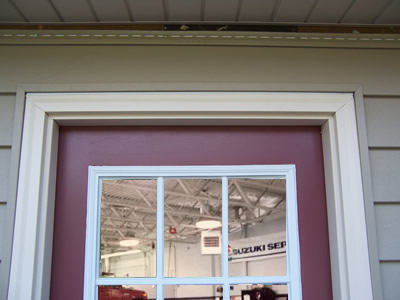
To Trim or to Paint

By Trim Bender , Posted Wednesday, 29 February 2012

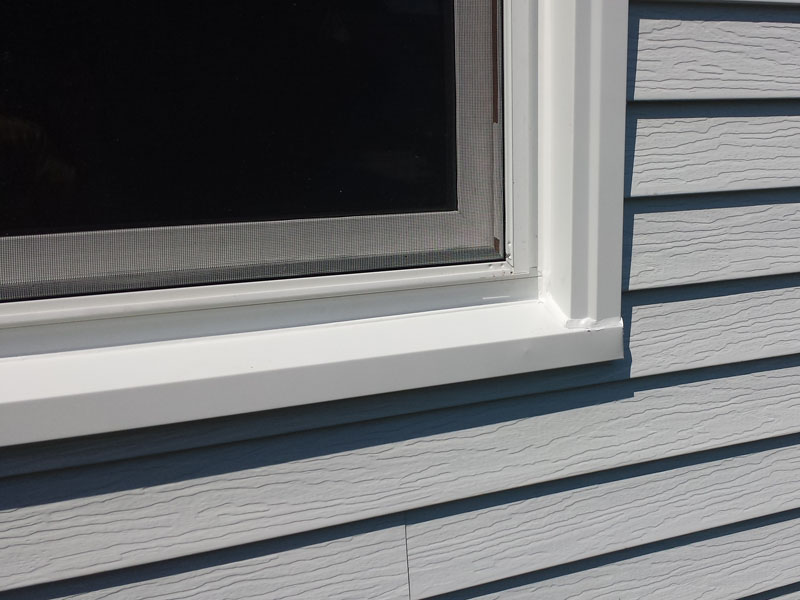
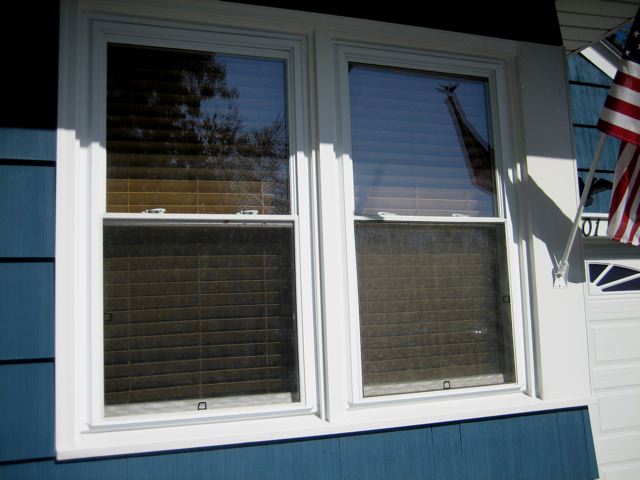
When springtime comes arond and you notice the paint on you windows and fascia are peeling again. It’s time to decide to paint them once again or cover them with aluminum trim and never deal with the back breaking problem again. Well there a few things to consider first.

A.Can I afford to trim everthing out?
B.Do I fell comfortable doing it myself?
C.And last but not least do I want to paint every year?
First things first trim is affordable if you do it your self with the products that we supply. If you were to hire a contractor to trim your house you’ll end up spending thousands compared to hundreds for the same out come. Another option is to rent a brake and by your own coil. The only problem with that is using an aluminum trim brake can be quite a challange in its self. So after the cost of the brake and coil you might end up save a couple bucks in material but lose money in the time spent learning and bending your trim and we all know time is money right?

Second with the videos we have put together any some what of a hanyman should be able to handle the job in front of them. Plus if any questions would come up during your job we are here to anwser your questions.

Third and last painting. Lets face no one want to scrape and paint there trim anymore. It might take a bit more time to trim out your house but once its done you wont have to worry about ever again.

If you have any question please fell free to contact us at any time at:
414-815- TRIM (8746)
This email address is being protected from spambots. You need JavaScript enabled to view it.

To order your trim our browse our products click here.

Wind Damaged Trim

By Trim Bender , Posted Tuesday, 19 February 2013

Nothing is worse then a bad wind storm that tears part of your aluminum trim off. Not only do you have to find someone that can replace the piece but you also have to match the color. That where we come into play. You would be surprised but you are not the only one that has to go through this problem every year.

The main thing we suggest is to try and  get a measurement off the damaged piece. If not you should be able to get your sizes off a piece that is still attached to the house. The next thing that needs to be done is matching the color. We offer a wide selection of colors so an almost exact match should not be a problem. Just mail us a section of the piece and we will match it for you.


The Problem With Ice Dams

By Trim Bender , Posted Tuesday, 19 February 2013

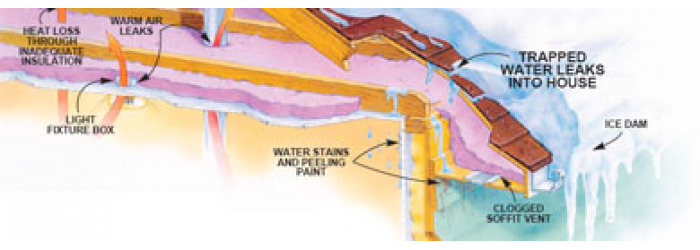
I recently received a call from a friend of mine telling me that he had a water leak underneath his toilet. The water was leaking along the water pipe the supplied water to the toilet and around the sub floor. So right away we assumed the the pipe was leaking inside the wall. The first thing we did we removed the toilet and cut a hole in the drywall around where the pipe came out. We soon found out that the pipe was not leaking at all but that the ice dam that had formed in the corner of his house was leaking in through the wall. After taking care of the ice dam we fixed all the rotted wood and drywall that was ruined from water damage. All this could have been avoided with a few precautionary measures.

Here are a few steps to avoid ice dams.

Close up attic bypasses
In the average home, about one-third of the heat loss is through the ceiling into the attic. And most of that loss comes from air leaks caused by unblocked walls, gaps in drywall, and cracks around light fixtures, plumbing pipes, chimneys, access hatches and other ceiling penetrations. Air leaks can be tough to stop. You have to climb into your attic, pull or rake back insulation, and plug the leaks using foam, caulk and other methods. Low roof angles make some air leaks difficult to reach. This work is definitely a cool weather project; your attic will be unbearably hot otherwise. Always wear a dust mask, a long-sleeved shirt and long pants to help prevent skin irritations caused by insulation.

Measure your attic insulation level
While you’re in the attic, check the depth of your attic insulation. Building codes require about 12 to 14 in. of fiberglass or cellulose. Add more if you have less than 8 in. and have had ice dam problems in the past. Blown-in cellulose and fiberglass are usually better than hand-placed batts, because they fill more tightly around rafters, joists and other obstructions, leaving fewer gaps. It’s usually worth hiring a professional for this job; you probably won’t save much by doing it yourself. However, if you can’t find a good price, you can rent a blowing machine from a rental yard or home center. Often, the use of the machine is free with the purchase of insulation. (Look under “Insulation” in your Yellow Pages.)

Add roof and soffit vents
Attic ventilation draws in cold outdoor air and flushes out warmer attic air, cooling the attic and the roof in the process. The minimum ventilation area (size of the openings) should be about 1 sq. ft. of vent per 300 sq. ft. of ceiling area (attic floor area), when half the vent area is low on the roof and half is high. Actually figuring all this out is a bit complex; you’d have to examine your existing vents to find the area of each, which isstamped on them. As a rule of thumb, put an 8 x 16-in. vent in the underside of the overhang (soffit) in every other rafter space. (If you’re planning to rebuild the soffit, install a continuous 2-1/2 in. wide “strip” vent, because it will look better.) And install a continuous ridge vent along the peak. If the ridge on your roof is much shorter than the roof edge-on pyramid-shaped roofs, for example-add the common squareshaped roof vents near the peak. Add enough so their ventilating area is about equal to the area of soffit vents. This might deliver a whole lot more ventilation than the minimum requirement, but don’t worry. You’re unlikely to have too much ventilation.

Rake the snow off your roof after a heavy snowfall.
A $30 snow rake, which is an aluminum scraper mounted at a right angle on a telescoping aluminum pole, is the simplest solution for occasional heavy snows. If you pull the snow down, it can’t melt and form an ice dam. It’s an effective, if tedious, solution, but only for single-story homes. You can’t reach the second-floor roof. (Never use a snow rake when standing on a ladder!) And you have to take care not to break the shingles, which are brittle in cold weather. Most home centers and hardware stores in ice dam country carry, or can order, snow rakes. Get one before the snow comes; demand goes up after the first heavy snowfall of the season.

Payment Methods

We accept all major Credit

Cards and PayPal payments

Accepted Payments

Secure Checkout

Secure Sockets Layer (SSL)
is a protocol for enabling data
encryption on the intranet and
for helping web site users confirm
the owner of the web site.

rapid-ssl

Why buy from us?

  • Safe & Secure Shopping
    SSL, PCI Compliant
  • Efficiency
    Fast, Affordable, Hassle Free
  • Quick Shipping
    UPS Ground FREE Over $250
  • Family Owned Business
    Committed and Caring

Contact Us

  • 5232 W. Oklahoma Ave.
    Milwaukee, WI 53219
  • Toll Free: (888) 408-4370
  • Phone: (414) 815-8746
  • Fax: (414) 755-2759